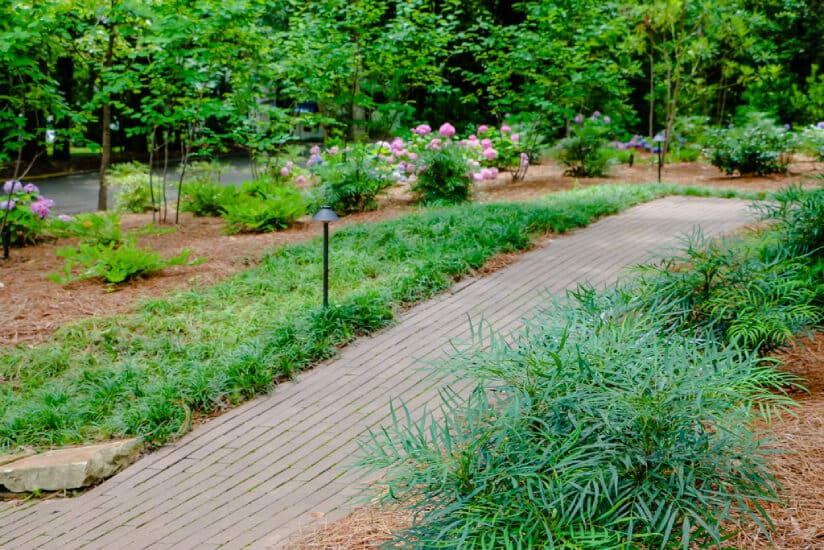
Connecting the Landscape
When people think about a landscape renovation, they usually picture the destination – a pool for summer afternoons, a patio for entertaining, a front entrance that makes a great first impression, or gardens full of color.
But the spaces between those destinations matter just as much.
A well-designed pathway gives an outdoor space structure. It guides movement, connects different areas of the property, and encourages you to experience the landscape one section at a time. Along the way, it can solve practical challenges like grade changes, drainage, and walkability while making the entire property feel more cohesive.
The most memorable walkways don’t compete with the landscape – they help you experience it.
A Natural Route
Some landscapes naturally invite you to slow down.
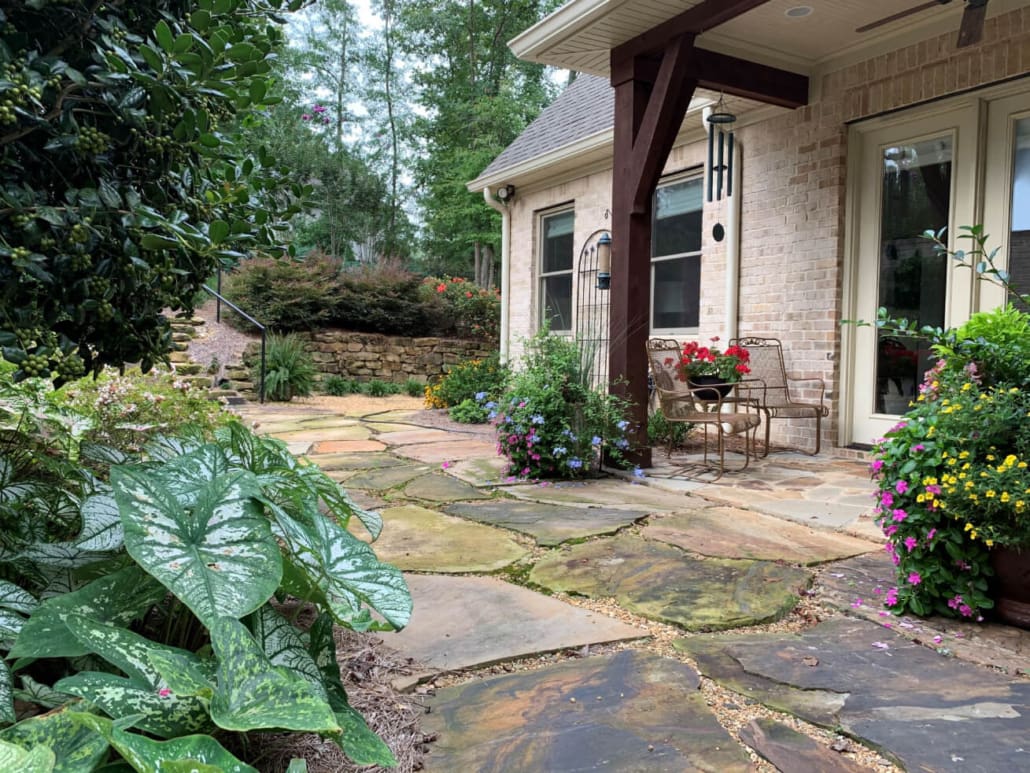
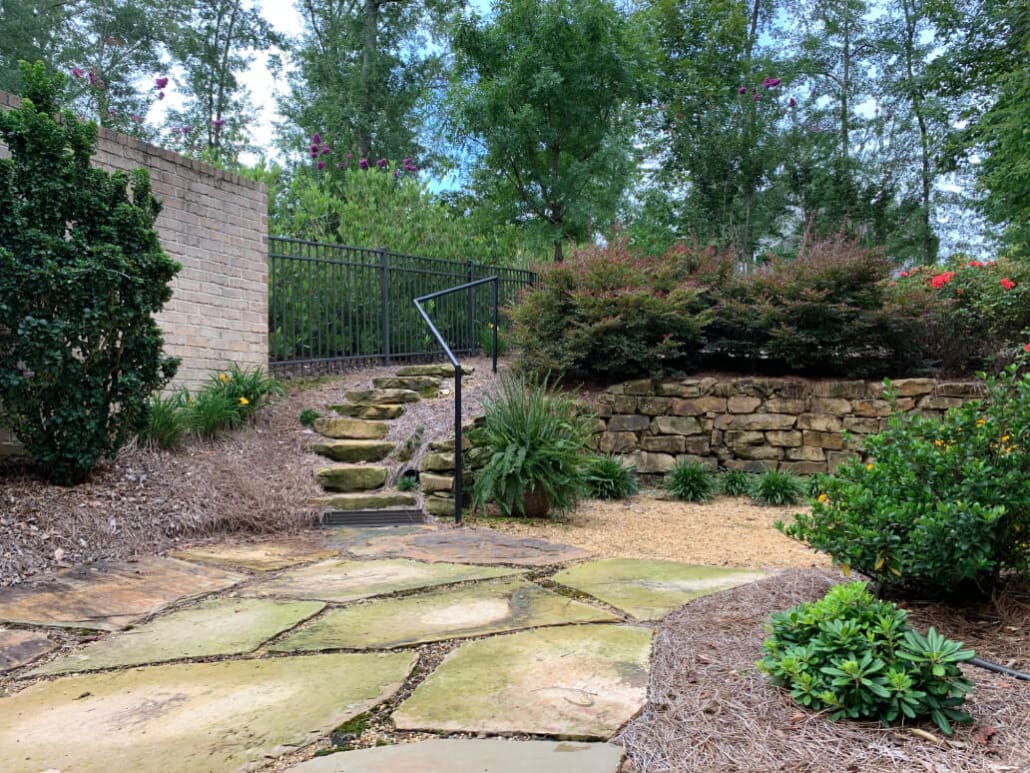
At this home, an informal flagstone path winds through layered planting beds, extending the patio into the surrounding gardens. Gentle curves lead you through the garden, revealing new views along the way rather than all at once.
The surrounding mix of shrubs, silver foliage, and groundcovers softens the edges until the walkway feels like a natural part of the landscape. Gravel between the stones reinforces the organic character of the path while allowing rainwater to soak naturally into the ground.
The result is a route that encourages you to linger, explore, and experience the landscape one step at a time.
Working with the Land
Changes in grade create opportunities for thoughtful design.
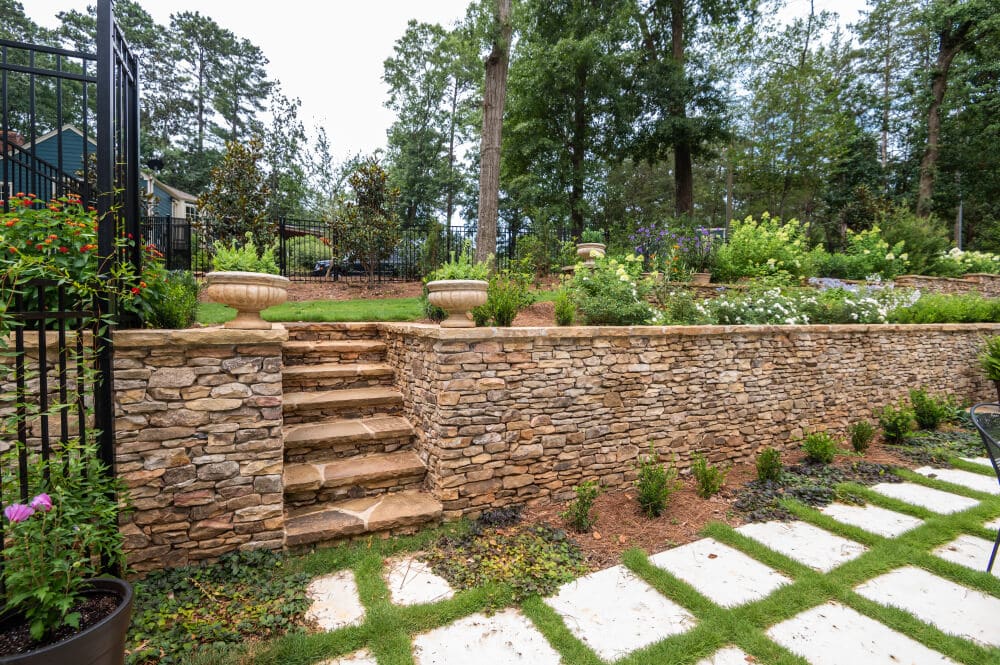
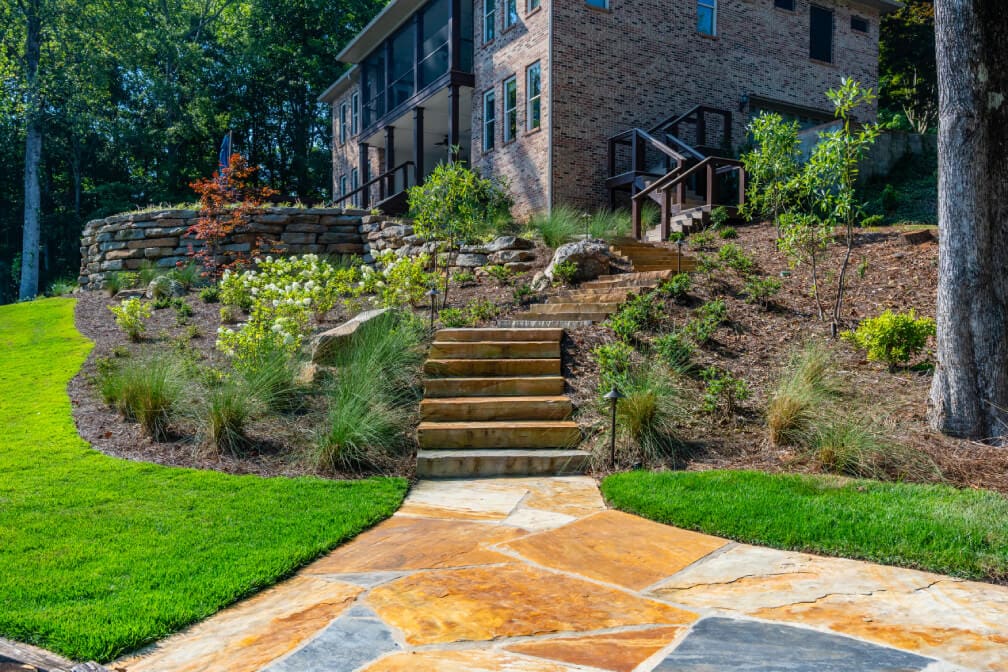
In another project, a natural stone retaining wall turns a change in elevation into one of the landscape’s defining features. Broad stone steps integrated into the retaining wall provide an easy transition from the lawn to the upper landscape
Below the steps, stone steppers blend into the lawn, creating a softer transition between the hardscape and surrounding landscape. The combination keeps the hardscape from feeling heavy while allowing rainwater to infiltrate between the stones.
Rather than hiding the changes in grade, the pathway celebrates it.
A Strong First Impression
The front walk is often the first interaction someone has with a home.
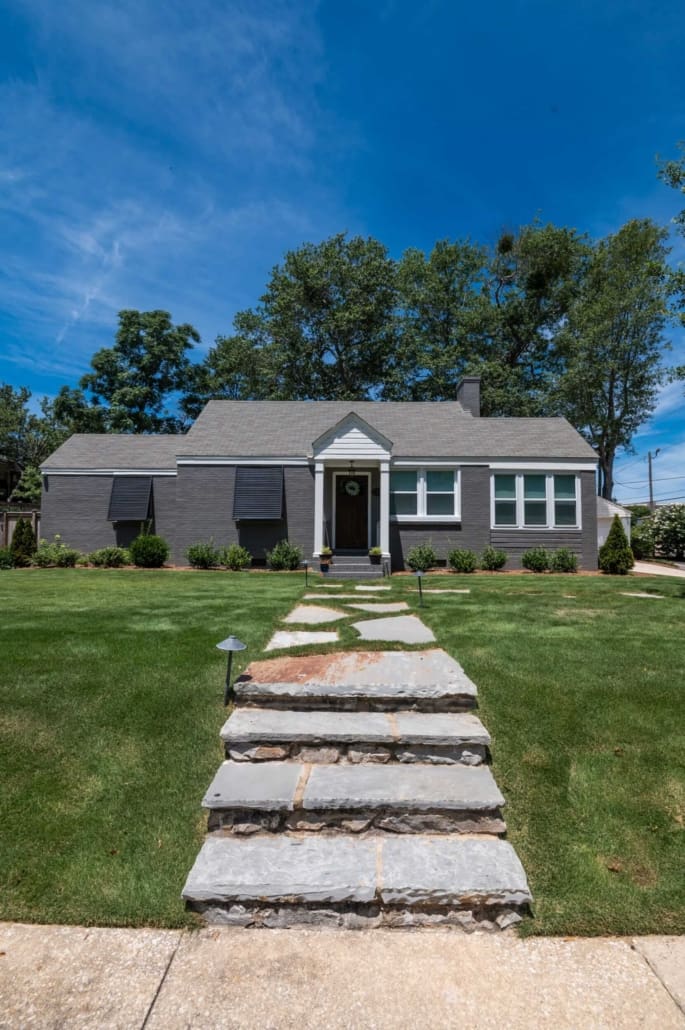
Here, large stone steppers establish a clean, welcoming route from the sidewalk to the front door. By allowing the lawn to weave between each stone, the design provides clear direction while preserving the openness of the front yard.
Low-voltage path lights keep the walkway safe and welcoming after sunset, improving visibility while adding subtle architectural interest.
Carefully proportioned, simple materials create an entrance that feels timeless.
Good Pathways Feel Effortless
The best pathways feel like a natural part of the landscape.
They’re sized to fit the property. Their materials reflect the home’s architecture. They solve problems without calling attention to them. And they make moving through an outdoor space feel comfortable and intuitive.
Whether that means stone steppers welcoming guests to the front door, an informal flagstone path winding through layered gardens, or broad stone steps navigating a change in grade, every walkway begins with the same question:
How should this landscape be experienced?
When that question drives the design, the result is more than a place to walk. It’s a landscape that feels connected – every step of the way.