
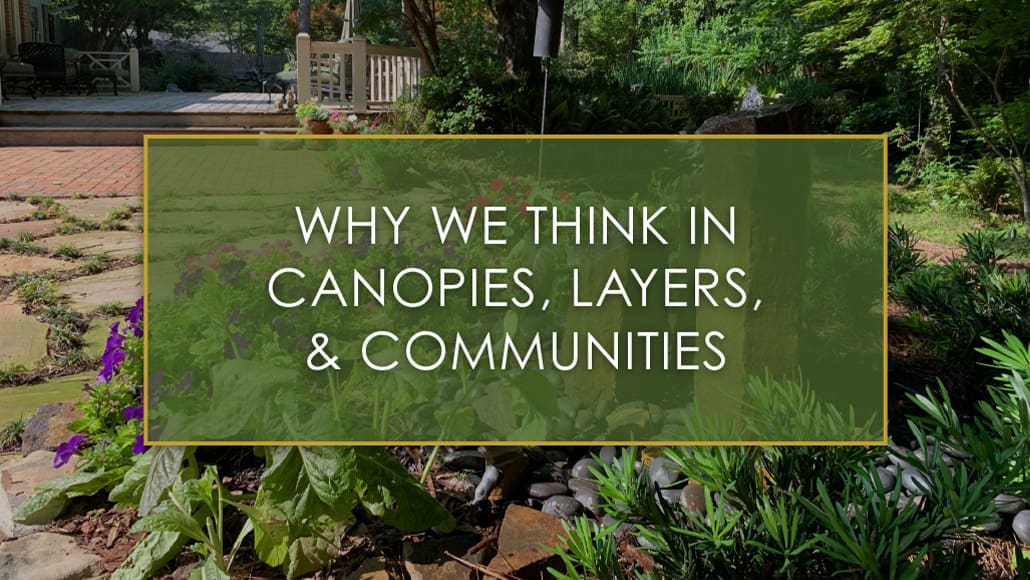
One of the first questions people ask when we start talking about a landscape design is some version of:
“So… what plants are we using?”
Totally fair question.
Plants are the visible part. They’re the fun part. They’re what people recognize, Google, and form strong opinions about after one bad experience in 2009.
But here’s the thing:
We don’t really start with individual plants.
We start with relationships.
Plants Don’t Live Alone
In the real world, plants don’t exist as isolated specimens.
They grow in plant communities. They share space, water, light, nutrients, and airflow. They protect each other. They compete with each other. They even change how the ground below them behaves – and how the space above them feels.
When we design landscapes as collections of individual “favorite plants,” everything gets harder.
- Plants struggle
- Maintenance goes up
- Things look good for a season… then slowly unravel
When we design plant communities, the landscape starts to function as a system instead of a lineup.
Let’s Talk About Layers (This Is Where the Magic Happens)
A healthy, resilient landscape design almost always includes layers.
- Canopy layer – trees that shape light, scale, and temperature
- Understory layer – smaller trees and large shrubs that create structure
- Shrub layer – mass, texture, and rhythm
- Ground layer – perennials, grasses, and groundcovers that protect the soil
Miss one of these layers, and the whole system starts working harder than it should.
Each layer has a job. Together, they create balance.
Skip a layer, and something else has to compensate. That’s usually when we start seeing plant stress, weeds, or the classic:
“Why doesn’t this look right?”
Why Designing Plant-by-Plant Causes Problems
When landscapes are designed one plant at a time, a few things tend to happen:
- Plants with completely different needs get grouped together
- Spacing gets tight because everything looks small on install day
- Maintenance becomes reactive instead of planned
It’s not that the plants are “bad choices.”
They’re just out of context.
Plants are surprisingly forgiving when they’re part of a system that supports them. On their own? Not so much.
Plant Communities Create Stability (and Less Maintenance)
When you design with plant communities and layered landscaping, a few important things happen:
- Roots occupy the soil more evenly, improving moisture balance
- Tree canopies create shade, reducing stress on lower plants
- Groundcover helps prevent erosion and suppress weeds
- The landscape becomes more resilient to weather and seasonal change
From a landscape maintenance standpoint, this matters.
A lot.
The space starts supporting itself instead of constantly needing correction.
This Isn’t Just About Performance – It’s About How a Space Feels
Plant communities don’t just perform better.
They feel better.
Spaces feel:
- Calmer
- Fuller
- More intentional
There’s a sense of depth and softness you just don’t get from isolated plants placed into mulch.
People don’t walk around identifying plant species.
They experience:
- Shade
- Enclosure
- Openness
- Movement
- Seasonal change
That’s what good outdoor space design creates.
What This Means for Your Landscape Project
If you’re working with a landscape designer and they keep redirecting the conversation away from individual plants and toward structure, layers, and long-term growth – that’s a good sign.
It means they’re thinking beyond install day.
They’re thinking about how your landscape will:
- Grow
- Adapt
- Function over time
You’ll still get plants you love.
They’ll just be chosen because they belong – not because they were on a list.
The Takeaway
Great landscapes aren’t built plant by plant.
They’re built by understanding how living systems work together.
When you design with canopies, layers, and plant communities, the result is:
- A more resilient landscape
- A more cohesive design
- A space that’s easier to maintain
And honestly?
A space that just feels right.
And for plant nerds like us…
That’s where the real fun is.